
Introducing MOAT: the BIOIO platform
MOAT (mechanism of action technologies) is a MoA-driven clinical indication prediction engine. MOAT combines both experimental and computational approaches.

Not all -omic approaches are created equal
We deploy multi-omics, but with two decades of experience, we’ve found that cell fitness based, unbiased genome-wide screening is the gold standard for establishing a small molecule’s MoA.
Cell fitness (i.e., cell counting) is the only -omic phenotype that creates reliable signal-to-noise amplification. It’s the key differentiator from all other -omic techniques, whether genetic or biochemical.
Importantly, the second generation of our MOAT platform, MOAT 2.0, can now perform these genomic screens virtually. Its AI-generated predictions are highly accurate, significantly reducing both the time and cost required for experiments.
The strengths of our approach are twofold.
Both aspects of the MOAT platform reinforce our focus on drug efficacy, a key factor in preventing therapeutic failure.
Understanding MoA for precision and synergy
First, ensuring an accurate understanding of a small molecule’s MoA is vital for establishing the contexts in which it might be effective and identifying potential liabilities. For example, in cancer treatment, therapies are often used in combination. Being precise about what each therapy uniquely targets is what enables strong synergies.
A ‘Pipeline in a Pill’ approach to gerotherapy
The second strength of our MoA-led approach is that we ensure the compounds we advance are bona fide gerotherapies—drugs that address underlying core aging mechanisms. Since aging is the #1 risk factor for most diseases, a gerotherapy-first approach creates a pipeline in a pill, where each asset can be applied to multiple clinical indications.
BIOIO-1001 is a first-in-class insulin sensitizer discovered using BIOIO's proprietary Mechanism of Action Technology (MOAT) platform.
BIOIO-1001 targets a unique NAD+-dependent pathway, modulating Sirtuin 3 (Sirt3). This mechanism induces fatty acid oxidation (FAO) without relying on PPARs, distinguishing BIOIO-1001 from existing metabolic drugs such as fibrates, glitazars, and thiazolidinediones.The compound's mode of action restores cellular energy balance and enhances metabolic flexibility, resulting in significant insulin sensitization.
This makes BIOIO-1001 a promising candidate for treating type 2 diabetes mellitus (T2DM), addressing insulin resistance at its root. Its mechanism bypasses the limitations and side effects associated with PPAR-targeting therapies, offering a potentially safer and more effective approach to improving metabolic health.

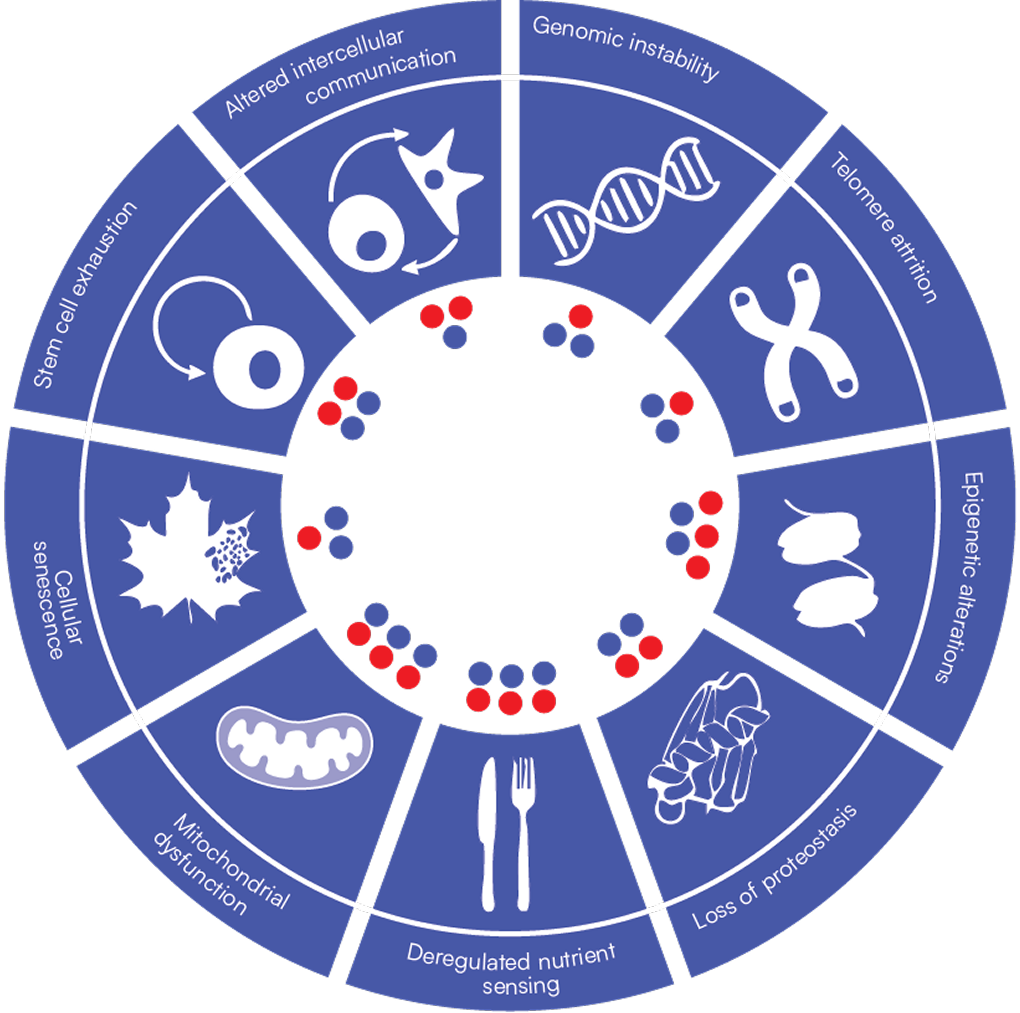
Lipids are core components of the hallmarks of aging
BIOIO-1001 and BIOIO-2001 act on lipid metabolism. They both impinge on multiple hallmarks of aging, allowing a non-reductionist approach for developing gerotherapeutics.

BIOIO's scientific background


April 21, 2026
BIOIO's MOAT platform helps elucidate an understudied protein's, TMEM178, connection to NLRP3 and inflammation -- published in Science Signaling. Collaboration with Gabriel Mbalaviele and colleagues at WashU.
November 26, 2025
In collaboration with the University Hospital of Zurich, MOAT found that Very long-chain fatty acids drive 1-deoxySphingolipid toxicity. This is a driver of Diabetic Neuropathy and targeted by BIOIO-2001.
September 15, 2024
BIOIO validates its in silico Gene2Drug MOAT module in models of Rheumatoid arthritis. MOAT identified a chemical mimic of IKBz inhibition (Pubmed: 39279148).
February 6, 2024
BIOIO assists WashU colleagues in characterizing the MoA of a novel autoimmune drug. (PMID: 38319963)
January 19, 2023
BIOIO publishes on the MoA and in vivo validation of BIOIO-1001.
May 20, 2020
BIOIO publishes in vivo validation of the bona fide longevity drug, bisphosphonates, in Science Translational Medicine.
May 1, 2020
BIOIO was funded with a STTR NIH grant for MOAT (R41GM137625).
April 14, 2020
BIOIO posts foundational work that led to BIOIO-2001 on BioRxiv. It identifies sphingolipid biosynthesis as a common MoA of many widely prescribed drugs.
February 10, 2020
BIOIO partners with SPARC (Sun Pharma) to use BIOIO’s MOAT platform for oncology drug development.
September 16, 2019
BIOIO was inaugurally funded with a fast track STTR NIH grant based on BIOIO-1001 (R42DK121652).
August 19, 2019
BIOIO posts its Omniphenotype manuscript to BioRxiv. This is the key conceptual framework for MOAT.